


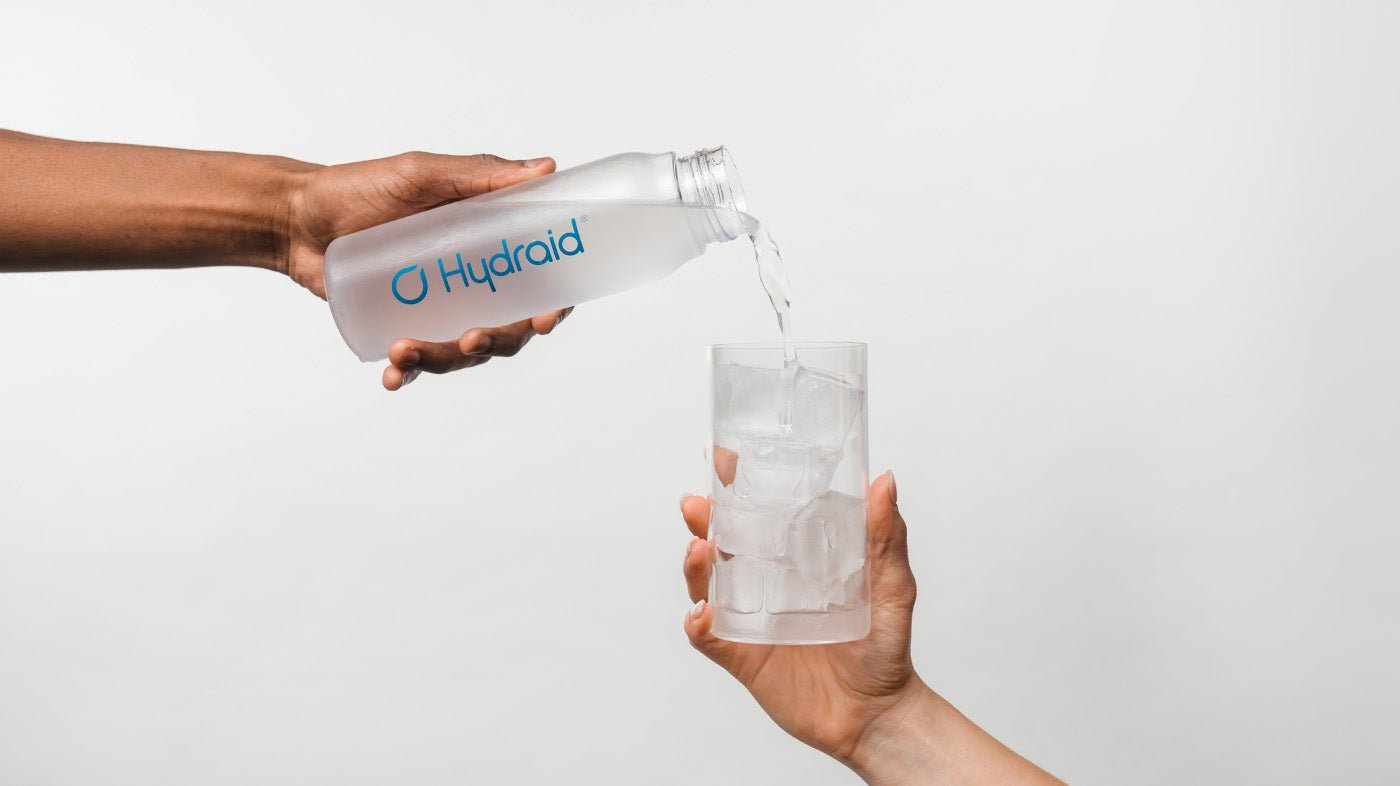
Drink more water! You’ve probably heard that more than once – and for good reason: 50% of Germans don’t drink enough. But there’s no one-size-fits-all answer to how much we should drink each day. Here’s everything you need to know about your individual fluid needs.
The role of water in the body
Depending on age and sex, your body is up to 70% water. Men naturally have a slightly higher proportion than women, and our water content falls as we age. Babies are around 80% water; older adults only about 50%.
Water performs a number of vital tasks in the body. It is a solvent for many substances and the transport medium for nutrients and oxygen. Water also regulates your body temperature and acts as a coolant in the heat and during physical exertion. As an essential component of cells and tissue, water also gives your body its shape. No wonder your fluid balance and your health are so closely linked.
Your fluid needs in everyday life
For your body to carry out all its vital functions, its fluid balance needs to be well maintained. On a normal day, your body loses around 1 litre of fluid through breathing and sweat, and 1.5 litres through urine – even when you barely move or are asleep. You take fluid back in through drinks and water-rich foods. As a rule of thumb for a healthy adult:
35 ml of water x body weight in kg = fluid needs in everyday life
How much fluid you actually need each day depends not only on your age but on many other factors, such as your activity level, the climate and any conditions such as diabetes.
Your fluid needs during physical activity
If you're on the go a lot, do sport or do strenuous physical work, your fluid loss rises to as much as several litres a day. How much extra fluid you should then take in roughly depends on how many calories you burn: per kcal burned = 1 ml of fluid required
An example: on a 10 km run, a 70 kg runner burns around 700 kcal and therefore needs around 700 ml of extra fluid. But when you sweat, your body always loses important minerals as well as water. The biggest losses are sodium and chloride, followed by potassium, calcium and magnesium. These are essential electrolytes that your body needs to function properly – and that you need to feel good. If you want to know more about why electrolytes matter, read our magazine article on the topic and click here . So especially after physical exercise, it’s not just about drinking plenty of water, but also about replenishing your electrolyte balance as well as possible. Carbohydrate-electrolyte solutions like the Hydration Helper® help you do that, enhancing your water absorption and supplying you with essential electrolytes. That way you actively counteract a fluid deficit – which can get pretty unpleasant.
Signs and effects of fluid deficiency
If your body gets too little water, it dries out. This process is called dehydration. The causes don't just lie in regularly drinking too little. Sudden heavy fluid losses – e.g. from heavy sweating, diarrhoea, vomiting or diuretic medication, but also blood loss or burns – contribute too. The first warning sign of incipient dehydration is thirst. In some people this kicks in at a fluid deficit of approx. 0.5% of body weight, in others only much later, at 2–3%. By then you've often already lost a litre. A lack of water in your body shows itself in many ways: weight gain can also be a sign of regular mild dehydration. We quite often mistake thirst for hunger and reach for snacks instead of giving our body low-calorie fluid. From a fluid loss of around 15%, dehydration becomes life-threatening. It must then be treated promptly with appropriate intravenous infusions, taking any pre-existing conditions into account, to restore the body's water and electrolyte balance. If adequate medical care isn't available nearby, oral rehydration solutions should be used to try to replace the fluid lost.
How to drink right
To stop dehydration from happening in the first place, here's how to supply your body with water properly. Although our body is made up mostly of water, it can't build up larger water reserves and relies on us drinking regularly. Drinking nothing all day and then knocking back a litre of water does give your body water back, but for your wellbeing, regularity is what counts. It's best to keep taking a few sips throughout the day so you avoid slipping into phases of dehydration.
In case you're now wondering whether you can drink too much water: in theory, yes. Too much fluid containing too little sodium dilutes the blood heavily and can lead to dangerous hyponatraemia (sodium deficiency). Fortunately, in healthy adults this rarely has negative effects, as you'd have to drink huge amounts of water before there's any real danger (8–12 L, depending on body weight). The rule of thumb is rather: better to drink a little more water than too little.